24/7 Roof Tarping Contractor in Los Angeles That Stops Leaks Before They Spread
Los Angeles roofs spend six or seven months baking under UV and 100°F valley heat with almost no rain. Then an atmospheric river drops weeks' worth of water in a single night. Cracked tile, split flashing and dried-out underlayment fail all at once, and every roofer in the county is booked for weeks. That gap is where interior damage happens: soaked drywall, ruined insulation, mold. LA Emergency Roof Tarping fills it. We're on call 24/7 to seal exposed roofs with heavy-duty, battened tarps that hold until permanent repairs or your insurance approval come through.
We know how roofs are built here. Clay barrel tile on 1920s Spanish Revival homes in Glendale. Tar-and-gravel flat roofs on Santa Monica dingbats. Concrete tile over 25-year-old felt in Santa Clarita. Each one needs a different tarping method, and a crew that tarps all three the same way usually leaves a new leak behind. Our bonded, insured team works across Los Angeles, Torrance, Silver Lake, Venice and nearby communities within a 20-mile radius. We photograph and timestamp every job so your insurance claim has the mitigation proof adjusters ask for.
- ✓24/7 emergency response, including nights, weekends and holidays
- ✓Bonded roof tarping contractor
- ✓Fully insured crews
- ✓Insurance claim documentation and adjuster support
- ✓Financing available
- ✓Serving a 20-mile radius around Los Angeles
- ✓Wind-rated tarping with battens and sandbags for Santa Ana conditions
Request Your Free Estimate
No obligation. Fast, honest quotes.
Thank you — your request was sent!
A member of the LA Emergency Roof Tarping team will reach out shortly. Need help now? Call 323-366-4462.
Why Los Angeles Roofs Need Professional Emergency Tarping
LA's weather has a reputation for being mild, and that's exactly why roofs here fail without warning. Long droughts, intense sun, hard winds, wildfire and the occasional earthquake all wear a roof down out of sight. Then a few big storms show you everything at once.
Climate: Dry for Months, Then a Year's Rain in Days
Downtown LA averages only about 14–15 inches of rain a year, and nearly all of it falls between November and March, often in a handful of intense storms. During the February 2024 atmospheric river, parts of the city got well over a foot of rain in a few days. The 2022–23 winter brought storm after storm. Between rainy seasons, UV indexes of 9–11 and inland highs above 100°F in the San Fernando, San Gabriel, Santa Clarita and Antelope valleys make shingles and underlayment brittle. Santa Ana gusts of 40–70+ mph in canyons and foothill passes lift shingles and crack tile. Coastal salt air corrodes fasteners in Santa Monica, Long Beach and Palos Verdes. After the January 2025 Palisades and Eaton fires, burn-scarred hillsides also raise the risk of debris flows when the rain comes back.
Built Environment: A Century of Roof Types
LA's housing covers every era. You'll find 1910s–1930s Craftsman bungalows and clay-tile Spanish Colonial Revival homes in Highland Park, Pasadena, Glendale and Whittier. Postwar tract ranches from the late 1940s–1960s line Lakewood, Downey, Norwalk and Bellflower, many with low-slope roofs or several re-roof layers. Flat built-up and torch-down roofs top dingbat apartments, mid-century modern homes and the industrial buildings of Vernon, Commerce and El Segundo. Hillside communities from the 1970s–2000s, such as Diamond Bar, Calabasas and Palos Verdes, have tile that looks fine over underlayment that's rotting away. Mature eucalyptus, pine and ficus trees drop limbs in windstorms, and the many ADUs and garage conversions add weak roof tie-ins.
Regulations, Insurance and the Storm-Chaser Problem
Emergency tarping generally doesn't need a building permit. Permanent re-roofing does, through LADBS or your city's or LA County's Building & Safety department. Historic Preservation Overlay Zones like Angelino Heights and Hancock Park, plus historic districts in Pasadena and Long Beach, regulate visible roofing changes, so temporary protection often has to last while approvals are pending. HOAs in Calabasas, Hidden Hills and Westlake Village may limit tarp color and how long a tarp can stay up. Insurers, including the California FAIR Plan that many homeowners have been moved to, expect you to take reasonable steps to prevent further damage. A documented tarp shows you did. After declared disasters, unlicensed contractors soliciting work are committing a felony, so check any contractor's CSLB license before you hire.
Common Roof Emergencies We Tarp Across Los Angeles
Most emergency calls we get trace back to a few predictable failures. Knowing what causes them, and what the warning signs look like, helps you act before a small leak turns into a ceiling collapse, mold, or a denied claim.
Active Storm Leaks Through Failed Underlayment Emergency
Water getting past the roof covering and into the attic or living space during heavy rain. On tile roofs, the tiles usually look intact. The real failure is the felt underlayment underneath, which has dried out, cracked or rotted through over decades.
Why it's common hereLA's long dry season hides this problem. Felt under clay and concrete tile breaks down from heat and age, and nobody notices because it barely rains from May to October. Then an atmospheric river sends inches of water across the roof in hours, and every weak spot leaks at once. Thousands of homeowners find leaks the same weekend, roofers book out for weeks, and a tarp becomes the only realistic way to stop the damage from getting worse.
Signs you'll notice- Brown water stains spreading on ceilings
- Dripping from light fixtures or ceiling vents
- Damp or matted attic insulation
- Bubbling or peeling paint near the ceiling line
- Musty smell after the first storm of the season
- Water running down interior walls
We see this most on 1970s–2000s tile roofs in Diamond Bar, Walnut, Calabasas and Santa Clarita, and on older Spanish Revival homes in Glendale, Pasadena and Alhambra. Calls spike within 24 hours of the season's first major storm.
Our fix: We tarp over the leak zone without cracking more tile, lap the tarp past the ridge, batten it down, and document the interior damage for your insurer.
Wind-Lifted Shingles and Cracked Tile Serious
Shingles that have been torn loose or creased, or tiles that have shifted and cracked, during high winds. This exposes underlayment or bare decking and leaves open paths for water to get into the roof.
Why it's common hereSanta Ana winds regularly gust 40–70+ mph through canyons and foothill passes. In the Antelope Valley, wind is close to constant. Shingles that have gone brittle after years of 9–11 UV exposure lose their seal strips and peel back easily. Tile that was set with dried-out mortar or corroded fasteners slides out of place. The damage often happens during dry Santa Ana events, so you may not find out about it until the next rain.
Signs you'll notice- Shingles or tile pieces in the yard or gutters
- Visible gaps or exposed felt from the street
- Lifted shingle tabs along ridges and edges
- Granules collecting at downspouts
- Rattling or flapping sounds on the roof during wind
This is common in Santa Clarita, La Cañada Flintridge, Sierra Madre, Agoura Hills and the San Gabriel foothills near Azusa, and in high-desert Lancaster and Palmdale. Coastal homes see it too, where salt air has weakened fasteners.
Our fix: We cover the damaged sections with a heavy-duty tarp secured by 2x4 battens and sandbags, so the next Santa Ana doesn't rip it off.
Tree Limb Puncture Emergency
A falling branch or whole tree that breaks through roofing, sheathing and sometimes rafters, leaving a hole open to the weather and possibly weakening the structure.
Why it's common hereOlder LA neighborhoods are full of mature eucalyptus, pine, ficus and sycamore trees. Many were planted decades ago, right next to houses. Eucalyptus is notorious for dropping heavy limbs in wind, and saturated soil during atmospheric rivers lets whole trees topple. These impacts usually happen in the middle of a storm, which is exactly when the house can least afford an open hole.
Signs you'll notice- Visible branch or debris on the roof
- Daylight through the attic sheathing
- Sagging ceiling below the impact point
- Cracked rafters or broken drywall
- Rain coming directly into a room
We see this often in tree-lined Pasadena, San Marino, Arcadia, South Pasadena, Burbank and Long Beach, and in hillside neighborhoods of the Santa Monica Mountains and Verdugos where big trees overhang homes.
Our fix: Once the debris is cleared, we board-and-tarp the opening, seal its edges, and photograph the structural damage for your adjuster and the permanent repair crew.
Flat Roof Ponding and Drain Failure Serious
Standing water on flat or low-slope roofs that gets into seams, blistered membranes, clogged drains and parapet flashing. Over time it soaks the decking and leaks into units or commercial space below.
Why it's common hereLA has a huge number of flat roofs: built-up tar-and-gravel, modified bitumen, torch-down and old rolled roofing. Summer heat blisters and cracks them. Scuppers and drains fill with leaves and debris all through the dry season. When heavy rain arrives, water pools behind parapets, finds every crack, and pours into apartments. Landlords then face tenant habitability obligations right away.
Signs you'll notice- Water pooling 48+ hours after rain
- Blistered, cracked or alligatored membrane
- Clogged scuppers or roof drains
- Leaks along walls near parapets
- Stains in top-floor units or suites
This is typical on dingbat apartments in Santa Monica, Culver City and West Hollywood, on mid-century homes, and on industrial and commercial roofs in Vernon, Commerce, Industry, Santa Fe Springs, Bell and Bell Gardens.
Our fix: We anchor the tarp without puncturing the membrane, position it to shed water toward the drains, and clear clogged scuppers to reduce ponding.
Fire-Damaged and Ash-Covered Roofs Emergency
Roofs that are partly burned, scorched or penetrated by embers, or covered in ash and soot. They may still look standing but can no longer keep water out, and the salvageable structure underneath is at risk.
Why it's common hereThe January 2025 Palisades and Eaton fires destroyed thousands of structures and left many more partly damaged in Pacific Palisades, Malibu, Altadena, Pasadena and Sierra Madre. Winter rain on a compromised roof washes ash and soot into insulation and drywall, turning a repairable home into a gut job. Burn zones may have restricted access, debris-removal protocols, and insurers who expect prompt mitigation.
Signs you'll notice- Scorched or melted shingles or vents
- Ember holes in roofing or skylights
- Heavy ash on the roof and in gutters
- Smoke odor in the attic
- Charred fascia or eaves
This is concentrated around the Palisades and Malibu, the Altadena/Eaton footprint, and the Pasadena and Sierra Madre foothills. Most of these homes sit in Very High Fire Hazard Severity Zones, where permanent re-roofs will need Class A materials.
Our fix: We weatherproof damaged areas before rain arrives, coordinate around access restrictions, and document the condition thoroughly for fire and FAIR Plan claims.
Earthquake-Cracked Tile and Chimney Flashing Moderate
Tiles cracked or shifted by ground shaking, plus chimneys and flashing that have separated from the roof, creating hidden leak points that may not show up until the next rain.
Why it's common hereThe 1994 Northridge earthquake showed how a single quake can crack tile and chimneys across the region. Even moderate shaking can loosen mortar-set tile and break the seal where an older brick chimney meets the roof. Many pre-1960 homes still have original unreinforced masonry chimneys.
Signs you'll notice- Visible cracked or slipped tiles
- Gaps between chimney and roofline
- Leaks around the fireplace wall
- Loose bricks or mortar debris
- New ceiling cracks after shaking
This shows up most in San Fernando Valley neighborhoods near Burbank and San Fernando, on Craftsman and Spanish homes in Highland Park and Silver Lake, and on older homes in Whittier and Monterey Park.
Our fix: We tarp the affected slopes and seal the chimney area temporarily, then document the damage for earthquake or homeowners coverage review.
Failed Roof Tie-Ins on Additions and ADUs Minor
Slow leaks where a newer addition, ADU or garage conversion meets the original roof, usually caused by poor flashing or mismatched slopes that let water get under the overlap.
Why it's common hereLA's ADU boom and decades of informal additions have put thousands of roof junctions on top of older homes. Many were flashed cheaply or tied low-slope sections into steeper roofs. They often get by for years of light rain, then start leaking during a sustained atmospheric-river soaking.
Signs you'll notice- Stains where old and new rooms meet
- Damp baseboards along an addition wall
- Gaps in step or counter flashing
- Moss or debris collecting in valleys
- Leaks only during long, heavy storms
We find these on postwar tract homes in Lakewood, Downey, Bellflower, Artesia, Baldwin Park and El Monte, and on infill lots in South LA, Inglewood and Hawthorne with garage conversions.
Our fix: We tarp the junction so water drains past the joint, which buys time for a roofer to re-flash it properly.
Our Roof Tarping and Temporary Protection Services
Every service below has one goal: keep water out of your home or building until a permanent repair is done. We match the tarping method to your roof type, your wind exposure and your insurance situation, because a tarp that blows off or cracks more tile just creates a second problem.
Emergency Roof Tarping ⭐ Specialty
We answer emergency calls 24/7 and come out to cover active leaks, open holes and exposed decking. The first goal is stopping water from getting inside, and we start documenting conditions for your claim from the moment we arrive.
Our approachWe use heavy-duty reinforced poly tarps that extend over the ridge, secured with 2x4 battens and sandbags rather than edge nails alone. Crews follow Cal/OSHA fall-protection practices, which matters on steep or wet roofs.
In Los Angeles, CAWhen the first atmospheric river of the season hits LA and roofers book out for weeks, emergency tarping is what keeps drywall, flooring and insulation dry. It protects your home from Silver Lake hillsides to Torrance tract homes while you wait for a permanent repair.
Best for: Homeowners, landlords and businesses with an active leak, a storm opening or a tree puncture who need water stopped tonight, not next week.
Storm Damage Roof Tarping ⭐ Specialty
We stabilize roofs damaged by heavy rain, Santa Ana winds or falling limbs, covering every compromised slope so the next storm in the series doesn't make the damage worse.
Our approachWind-rated installations with battened perimeters, sandbag ballast and tarps oriented to shed water downslope. We check them after high-wind events, because LA storms often come in back-to-back waves.
In Los Angeles, CASanta Ana gusts of 40–70+ mph shred tarps that are only nailed at the edges. Our battened systems are built for canyon and foothill exposure in places like Santa Clarita, Agoura Hills and La Cañada Flintridge.
Best for: Properties hit by windstorms, atmospheric rivers or tree impacts, especially in canyons, foothills and other exposed hillside locations.
Temporary Roof Covering
We provide longer-term protection for roofs waiting on permits, historic-district approval, insurance decisions or rebuild schedules, including fire-damaged structures that need to stay dry through a whole rainy season.
Our approachFull-slope or full-roof coverage, board-up of openings, and tarp colors and placement chosen to meet HOA rules where possible. On flat roofs we anchor without penetrating the membrane.
In Los Angeles, CAHPOZ approvals in Angelino Heights or Pasadena historic districts, rebuild timelines in the Palisades and Altadena, and HOA reviews in Calabasas can stretch for months. Temporary covering keeps the structure dry in the meantime.
Best for: Fire-damaged homes, historic properties, HOA communities and any roof facing a long wait before permanent replacement.
Roof Tarp Installation
We install tarps correctly the first time on tile, shingle, flat, metal and older wood shake roofs, protecting the existing roofing as we go.
Our approachOn tile roofs we step carefully and pad contact points to avoid cracking more tile. On flat roofs we position tarps to keep water moving toward the drains. Every tarp laps past the ridge and gets battened down.
In Los Angeles, CALA has clay barrel tile on 1920s homes, gravel roofs on postwar ranches, and torch-down on Commerce warehouses. Each needs its own attachment strategy, or the tarp itself causes leaks.
Best for: Anyone who wants a tarp that doesn't create new damage, especially owners of tile, flat or historic roofs.
Roof Tarp Repair & Maintenance
We inspect, re-secure, re-tension and replace tarps that have loosened, torn or degraded, whether we installed them or someone else did.
Our approachWe check before and after storms, replace UV-degraded tarps, add battens and ballast, and clear debris that traps water on top of the tarp.
In Los Angeles, CALA's intense sun breaks down tarp material within months, and Santa Anas loosen weak installs. Maintenance matters for long rebuilds and slow insurance claims.
Best for: Properties with a tarp that has been up for weeks or months, or one that has already started flapping, tearing or leaking.
Insurance Claim Assistance
We document your damage and our mitigation work so your claim has the evidence adjusters ask for. Emergency tarping is often covered under homeowners policies as a reasonable step to prevent further damage.
Our approachTimestamped before-and-after photos, written damage notes, itemized invoices, and direct communication with your adjuster when you ask us to.
In Los Angeles, CAWith so many LA homeowners non-renewed and moved to the FAIR Plan, insurance friction is high. Clear mitigation records help protect your claim and show you met your duty to prevent further loss.
Best for: Homeowners and landlords filing storm, wind, tree or fire claims, including FAIR Plan policyholders.
Our Emergency Tarping Process
When water is coming through your ceiling, you need to know exactly what happens next. Here's how we go from your first call to a sealed, documented roof.
Call or Request Help 24/7
- We take details on the leak, your roof type and how to access the property
- We give you interior steps to take right away: move valuables, catch water, shut off power to wet fixtures
- We dispatch a crew and give you an arrival window
- We note your insurer, including FAIR Plan coverage if you have it
Local note: Response times depend on traffic, storm volume and distance within our 20-mile radius. Tell us about gated access, permit parking or burn-zone restrictions so we can plan around them.
Safety Check and Damage Documentation
- We assess roof safety, pitch and wet-surface conditions
- We photograph and timestamp exterior and interior damage
- We identify every compromised area, not just the obvious leak
- We flag hazards like structural sagging or possible asbestos-containing older roofing
Local note: On steep hillside homes in the Santa Monica Mountains or San Gabriel foothills, we set up fall protection before anyone walks the roof.
Tarp Installation
- We clear debris and loose material from the area
- We lay heavy-duty tarp over the ridge and past the damage
- We secure it with 2x4 battens and sandbags rated for wind
- On flat roofs we anchor without puncturing and position for drainage
Local note: Tile roofs need careful foot placement, and Santa Ana exposure calls for extra ballast. We adjust to both.
Interior Check and Claim Package
- We confirm water entry has stopped
- We take after-photos and write up an itemized invoice
- We provide a documentation package for your insurance adjuster
- We explain what permanent repairs will likely involve
Local note: Insurers expect reasonable mitigation. Our records show when and how you protected your property.
Monitoring Until Permanent Repair
- We check the tarp after major storms or wind events
- We re-secure or replace it if it has degraded from UV or wind
- We coordinate with your roofer or adjuster when you ask us to
Local note: HPOZ approvals, HOA reviews and post-fire rebuild protocols can take months. We keep the protection working the whole time.
Why Angelenos Call LA Emergency Roof Tarping
We Answer 24/7, Including the Night of the Storm
Roofs don't fail on business hours. In LA, leaks show up in the middle of an overnight atmospheric river or during a Santa Ana windstorm on a holiday weekend. We answer the phone around the clock and send crews out while the weather is still bad, because every hour water comes through a ceiling adds drywall, insulation and flooring to the repair bill. Quick tarping is the cheapest part of any roof emergency. It's also what keeps a contained leak from turning into a mold problem or a ceiling that comes down.
Insurance Claim Support Built Into Every Job
Emergency tarping is often covered under homeowners policies, because insurers expect you to take reasonable steps to prevent further damage. We make that step easy to prove. Every job includes timestamped before-and-after photos, written damage notes and an itemized invoice you can send straight to your adjuster. That matters even more now that many LA homeowners have been moved to the California FAIR Plan, where claims can involve more scrutiny. When you want us to, we'll talk with your adjuster directly about what we found and what we did.
Bonded and Insured, Not a Storm Chaser
After big fires and storms, unlicensed operators flood LA neighborhoods, take deposits and disappear. In declared emergency areas, that kind of solicitation is a felony, and the CSLB runs sting operations to catch it. We're a bonded and insured roof tarping contractor, so you're protected if something goes wrong on your property. We encourage every homeowner to verify the credentials of anyone who climbs on their roof, us included. You'll get a clear invoice and accountable people, not a cash-only crew in an unmarked truck.
Tarping Methods Matched to LA Roof Types
A tarp that's right for asphalt shingles can crack a clay barrel-tile roof or puncture a flat torch-down membrane. We work on Spanish Revival tile in Glendale, gravel roofs on Lakewood ranches, dingbat flat roofs in Santa Monica and industrial roofs in Vernon, and we adjust our approach for each. That means padding contact points on tile, using non-penetrating anchors on flat roofs, and positioning tarps so water drains properly instead of ponding on top of them.
Installations That Survive Santa Ana Winds
Most tarp failures in Southern California happen because the tarp was only nailed at the edges. When 50-mph gusts come down a canyon, the wind catches the tarp and tears it apart, sometimes taking shingles with it. We lap every tarp past the ridge, batten the perimeter with 2x4s and ballast it with sandbags. That's how a temporary repair holds through a whole rainy season in exposed spots like Santa Clarita, Agoura Hills and the San Gabriel foothills.
Transparent Pricing and Financing Available
You shouldn't have to guess what an emergency is going to cost. Before we start, we explain the scope based on roof size, pitch, material and how much area needs covering, so there are no surprise charges afterward. If the timing is tough, or you're waiting on an insurance payout, financing is available to help you protect your home now. Our itemized invoices also make reimbursement easier if your policy covers mitigation.
Local Coverage Across a 20-Mile Radius
We serve Los Angeles and surrounding communities within a 20-mile radius, including Santa Monica, Glendale, Torrance, Santa Clarita, Silver Lake and Venice. Working locally means we know the difference between a hillside driveway in Mount Washington and a permit-parking block in West Hollywood, and we plan our access before we arrive. It also means we're close by for follow-up checks after the next storm rolls in.
Bonded, Insured and Ready 24/7
Los Angeles homeowners, landlords and business owners call us when water is coming in and they need someone they can trust. We arrive prepared, install tarps that hold, and leave you with clear documentation for your insurer.
Bonded • Insured • Financing available
Roof Tarping Service Areas Around Los Angeles
We're based in Los Angeles and respond to emergency roof tarping calls throughout the surrounding communities, from coastal flat roofs to hillside tile homes and valley tract houses. Here are some of the areas we serve most often.
Westside, Coast & South Bay
Central LA, Hills & Valleys
San Gabriel Valley & Southeast LA
Our core service area is a 20-mile radius around Los Angeles. That includes Santa Clarita, Long Beach and much of the San Gabriel Valley edge. If you're in an outlying community like Lancaster, Palmdale, Claremont, Pomona or Avalon, call us to confirm availability during storm surges. Not sure if we cover your area? Call (323) 366-4462.
How Much Does Emergency Roof Tarping Cost in Los Angeles?
Most emergency roof tarping jobs in LA cost somewhere between a few hundred and several thousand dollars. Where yours lands depends on roof size, pitch, material and access. Emergency tarping is often covered by homeowners insurance as mitigation, so the cost you pay out of pocket may be lower than the price below.
Area Covered and Roof Size Primary Factor
The biggest variable is how many square feet need protection. A single puncture over a bedroom might need one 20x30 tarp. A wind-stripped slope or a fire-damaged roof can need several large tarps lapped together. Bigger coverage means more material, more battens, more sandbags and more labor hours. A full-slope tarp on a two-story home costs much more than a spot patch, but it's often the only way to stop multiple hidden leaks at the same time.
Roof Material Primary Factor
Clay and concrete tile take more time and skill to tarp, because crews have to place each step carefully and pad contact points to avoid breaking more tile. That's common on Spanish Revival homes and hillside developments across LA. Flat roofs need non-penetrating anchoring and careful drainage placement. Standard asphalt shingle roofs are usually the quickest and least expensive to tarp. Old wood shake or fragile gravel roofs may need extra care.
Pitch, Height and Access Secondary Factor
Steep pitches, second and third stories, and hillside lots in the Santa Monica Mountains or Verdugos call for additional fall protection and more time. Narrow streets, gated communities, burn-zone checkpoints and permit parking can also add labor. A single-story ranch house with an open driveway is the simplest case. A tall hillside home reached by stairs is the most involved.
Timing and Storm Demand Secondary Factor
After-hours, overnight and peak-storm calls can cost more, because crews are working in rain and wind while demand surges countywide. When an atmospheric river hits, thousands of LA roofs fail at once. Calling at the first sign of a leak, or before a forecast storm, usually gets you faster scheduling.
Duration and Maintenance Variable Factor
Some tarps only need to last a week. Others stay up for months during insurance disputes, HPOZ reviews or fire rebuilds. LA's UV breaks down tarp material over time, so longer projects may need periodic re-securing or replacement. Ongoing maintenance visits are priced separately from the initial install.
| Typical project | Details | Estimated range |
|---|---|---|
| Small puncture from a fallen branch | Single-story shingle ranch home in Downey; one roughly 200 sq ft area with a battened tarp | $450 – $1,100 |
| Storm leak on a tile roof | Two-story Spanish Revival in Glendale; one full slope of clay tile tarped without further breakage | $1,200 – $3,000 |
| Flat roof ponding leak on an apartment building | Dingbat 6–8 unit building in Santa Monica; non-penetrating tarp over the leak zones, plus drain clearing | $1,500 – $4,000 |
| Fire-damaged roof weatherproofing | Partially burned hillside home in the Pasadena foothills; multi-slope coverage with board-up of openings | $3,500 – $9,000+ |
Financing is available for emergency tarping, so you can protect your property now even if you're still waiting on an insurance payout. Interior water damage can easily run into the tens of thousands once drywall, flooring, insulation and mold remediation come into it. A properly installed tarp costs a small fraction of that, and it's usually the first thing an adjuster will ask whether you did.
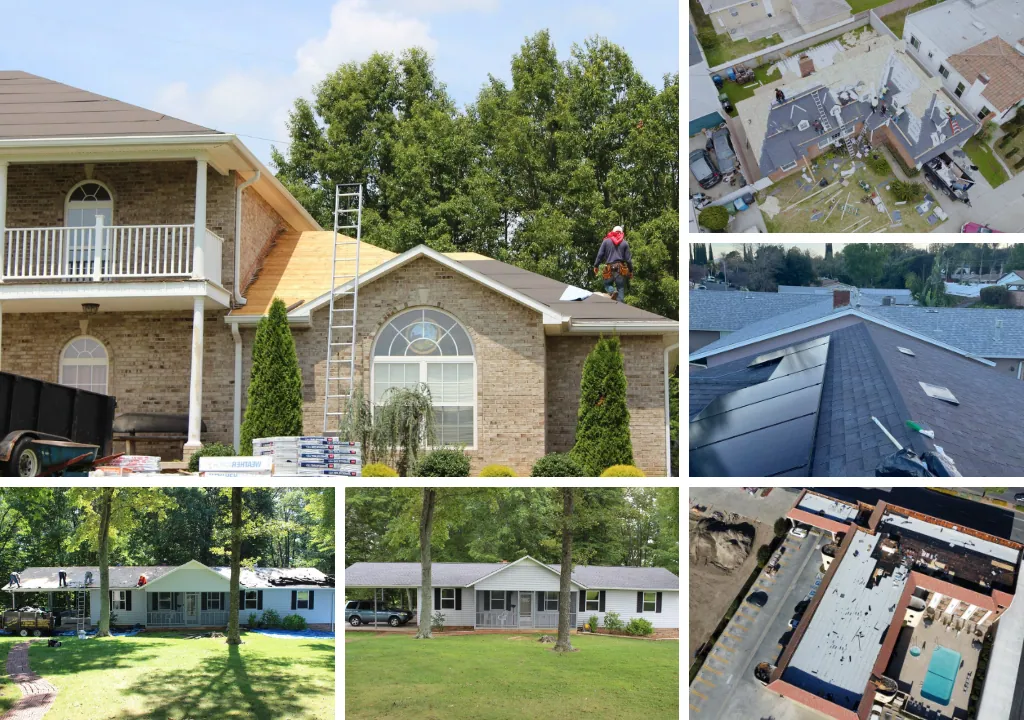
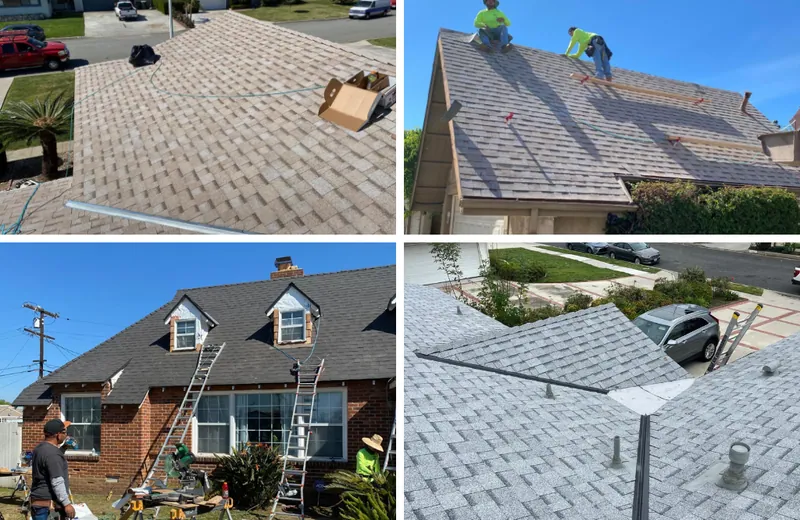
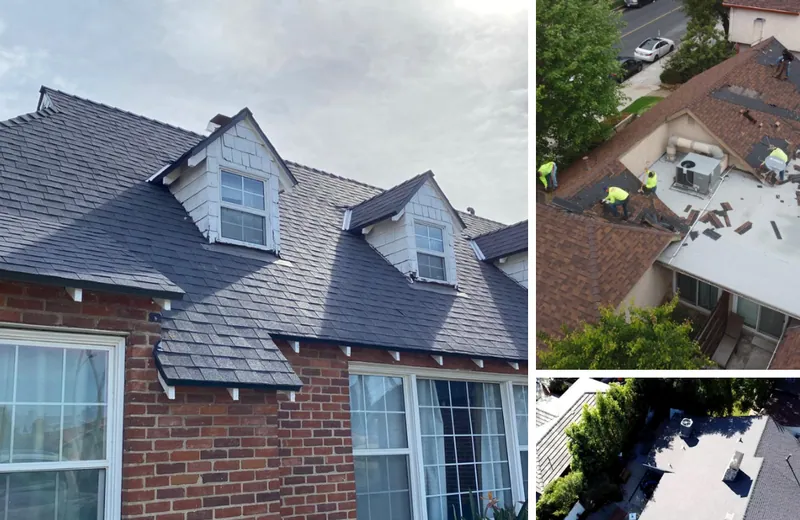
Recent roof-tarping Projects in Los Angeles, CA
Roof Tarping FAQs for Los Angeles Property Owners
Does homeowners insurance cover emergency roof tarping?
Often, yes. Most homeowners policies require you to take reasonable steps to prevent further damage after a covered loss, and emergency tarping is the textbook example. Many insurers reimburse those mitigation costs as part of the claim, though coverage depends on your policy, your deductible and the cause of the damage. FAIR Plan policies, which a lot of LA homeowners now have, work differently from standard homeowners coverage, so check your specific terms. We give you timestamped photos, damage notes and an itemized invoice so you have the documentation adjusters ask for. Wear-and-tear leaks may not be covered.
How much does it cost to tarp a roof in Los Angeles?
Most LA emergency tarping jobs fall between about $450 and $4,000. Small spot repairs are at the low end. Larger tile, flat or multi-slope jobs are at the high end. Fire-damaged roofs that need multi-slope coverage and board-up can go past $9,000. Price depends on how much area needs covering, roof material, pitch, height, access and whether the call comes overnight during a storm surge. Because tarping is often covered as mitigation, your out-of-pocket cost may be lower. We explain the scope before starting, and financing is available.
How quickly can you get a tarp on my roof?
We respond 24/7, and most tarp installations take between one and four hours once the crew is on site. Arrival time depends on where you are in our 20-mile radius, traffic and how many calls come in during a major storm. The first atmospheric river of the season can bring a wave of calls at once. Call at the first sign of a leak instead of waiting to see whether it gets worse. Meanwhile, move valuables, put containers under drips, and turn off power to any wet light fixtures.
Do I need a permit for emergency roof tarping in LA?
Generally, no. Temporary emergency tarping doesn't usually need a building permit from LADBS or LA County Building & Safety. Permanent re-roofing does, and re-roofs may also trigger Title 24 Cool Roof rules or Class A fire-rating requirements in Very High Fire Hazard Severity Zones. If your home is in an HPOZ like Angelino Heights or Hancock Park, or in a historic district in Pasadena or Long Beach, visible permanent changes need approval. Your HOA may also have rules on tarp color or how long a tarp can stay up, so check before a long-term install.
How long can a roof tarp stay up?
A properly battened, heavy-duty tarp can usually protect a roof for anywhere from 30 to 90 days, and longer with maintenance. LA's intense UV breaks down tarp material faster than in cloudier climates, and Santa Ana winds put a lot of stress on loose installations. For longer waits, like insurance disputes, HPOZ approvals or post-fire rebuilds, we recommend inspections after major storms and wind events and replacing the tarp when it shows wear. A tarp is temporary protection, not a substitute for permanent repair.
Will tarping damage my tile or flat roof?
It shouldn't if it's done right, but bad tarping causes a lot of extra damage. Walking on clay or concrete tile without careful foot placement cracks more tiles, and nailing through a flat membrane creates new leak points. We pad contact points on tile roofs, use non-penetrating anchoring and ballast on flat roofs, and position tarps so water drains instead of ponding. We see these roof types every day across LA, from Spanish Revival homes to flat-roof apartments and commercial buildings.
How can I prevent emergency roof leaks before the rainy season?
Schedule a roof check in late summer or early fall, before the November–March rainy season starts. Clear gutters, scuppers and flat-roof drains, which fill with leaves and debris over the dry months. Look for cracked or slipped tiles, lifted shingles and gaps at chimney flashing, especially after Santa Ana winds or an earthquake. Trim overhanging eucalyptus, pine and ficus limbs. If your tile roof is 20 to 30 years old, the underlayment may be failing even when the tiles look fine, so have a roofer inspect it.
When should I call for an emergency tarp instead of waiting?
Call right away if water is coming into living space, a tree or limb has punctured the roof, you can see daylight through the attic, wind has torn off shingles or tiles with rain on the way, or fire has damaged your roof. Waiting even one storm cycle can let water soak insulation, drywall and framing, which raises repair costs and can make an insurer question whether you mitigated the damage. If a storm is forecast and you already know about damage, tarp before the rain arrives.
Serving Los Angeles, CA & Nearby
Get Your Roof Tarped Before the Next Storm Hits
Every hour your roof stays open, more water gets into your home. Call LA Emergency Roof Tarping any time, day or night, and we'll get your roof sealed and give you documentation ready for your insurance claim.
- ✓24/7 emergency response, including nights, weekends and holidays
- ✓Heavy-duty, battened tarps built to hold up in Santa Ana winds
- ✓Tarping methods for tile, shingle and flat roofs that avoid causing new damage
- ✓Timestamped photos and itemized invoices for your insurance claim
- ✓Help with mitigation that's often covered by insurance
- ✓Bonded and insured crews
- ✓Financing available
⚡ Water coming through your ceiling right now? Move valuables away from the leak, turn off power to any wet fixtures, and call us. We'll dispatch a crew immediately.
Bonded • Insured